
Table of Contents
A single canvas looks good on a wall. A well-planned group of canvases makes the whole room look designed. That is the promise of a gallery wall, and it is easier than most people think: a little measuring, a layout pattern that fits your wall, and consistent spacing.
This guide covers the full process: planning, choosing a layout, mixing sizes, spacing, color cohesion, and getting everything hung straight.
What Is a Canvas Gallery Wall?
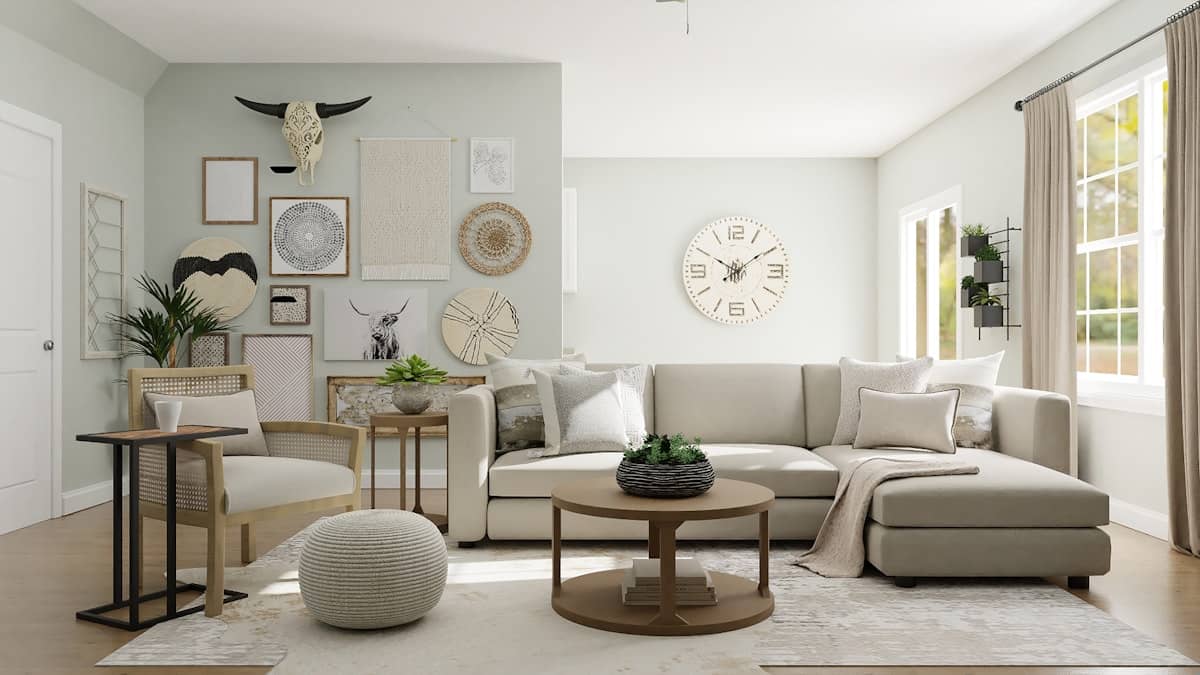
A canvas gallery wall is a curated arrangement of three or more canvas prints displayed as one visual composition. Instead of a single large piece, you combine multiple sizes, subjects, or panels to tell a story across the wall. Done well, it works as a focal point in living rooms, hallways, staircases, and bedrooms.
Canvas is a forgiving medium for this. Gallery-wrapped canvas prints have no glass and no glare, and the wrapped edges give a group a unified, frameless look without you having to match frame styles. Each print arrives ready to hang, so assembling a gallery is a layout exercise, not a framing project.
How Do You Plan a Gallery Wall Before Hanging Anything?
Plan in three steps: measure the wall, choose your prints, and test the arrangement before touching a hammer. Measure the usable area first, subtract at least 3 to 4 inches of breathing room on each side, then lay the actual layout out on the floor or with paper templates taped to the wall.
Here is the process in detail:
- Measure the wall. Note the full width and height, plus obstacles like light switches, sconces, and furniture. Above a sofa or console, aim for a grouping about two-thirds to three-quarters the width of the furniture.
- Pick your canvases. With 50+ standard sizes from 8x10 up to 40x60, plus fully custom dimensions, you can fill nearly any footprint. Odd numbers of pieces (3, 5, 7) tend to look most natural in loose layouts.
- Do a floor layout. Arrange the prints on the floor in the same footprint as the wall. Photograph the arrangement you like so you can rebuild it exactly.
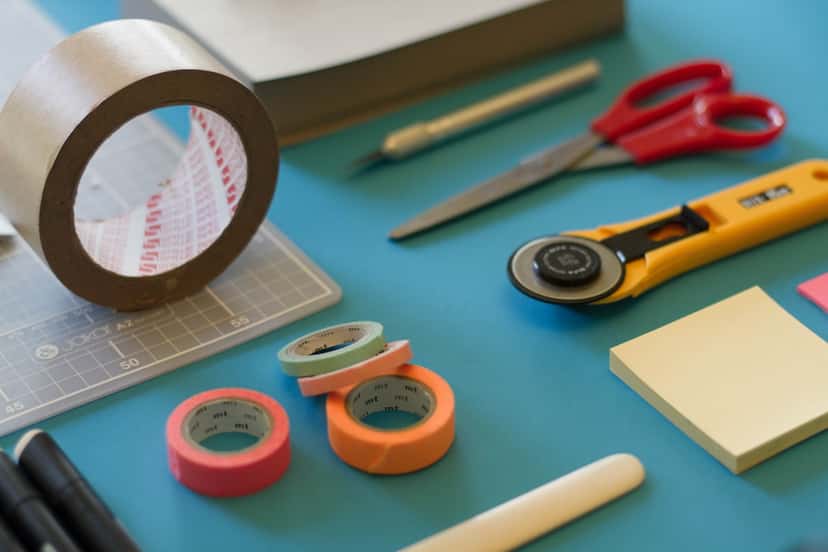
- Make paper templates. Trace each canvas onto kraft paper or newspaper, cut the shapes out, and tape them to the wall with painter's tape. Live with them for a day. It is much easier to move paper than nail holes.
Which Gallery Wall Layout Should You Choose?
Choose your layout based on how much order you want and where the wall sits. Grids feel modern and structured, salon-style walls feel collected and personal, centerline layouts suit mixed sizes in hallways, and staircase layouts follow the diagonal of the steps. All four use the same spacing rules; only the geometry changes.
| Layout | The look | Best for | Difficulty |
|---|---|---|---|
| Grid | Identical sizes in even rows and columns; clean and modern | Living rooms, offices, above sofas and beds | Easy, but spacing must be exact |
| Salon | Mixed sizes clustered organically around a center point | Large blank walls, eclectic and collected interiors | Moderate; needs a floor layout first |
| Centerline | Different sizes aligned along one horizontal midline | Hallways, long walls behind consoles | Easy; one level line does the work |
| Staircase | Pieces step upward parallel to the stair angle | Stairwells and split-level walls | Moderate; centers follow the diagonal |
If unsure, start with a centerline layout. Hang every canvas so its vertical center sits on one light pencil line at eye level, and the wall instantly looks organized even with wildly different sizes.
How Do You Mix Canvas Sizes on One Wall?
Use the anchor-and-satellites method: pick one large canvas as the visual anchor, place it just off-center, then arrange smaller pieces around it. A 24x36 anchor with four to six satellites between 8x10 and 16x20 is a reliable recipe for a wall behind a sofa.
A few sizing guidelines that keep mixed arrangements balanced:
- One anchor, not two. Two equally large pieces compete for attention. Let one dominate and support it with smaller work.
- Vary orientation. Mix portrait and landscape canvases so the eye keeps moving through the composition.
- Repeat sizes in pairs. Two 11x14s placed on opposite sides of the anchor create rhythm without rigid symmetry.
- Keep visual weight low and centered. Larger, darker pieces belong lower and closer to the middle; lighter, smaller pieces can float toward the edges.
How Far Apart Should Canvas Prints Hang?
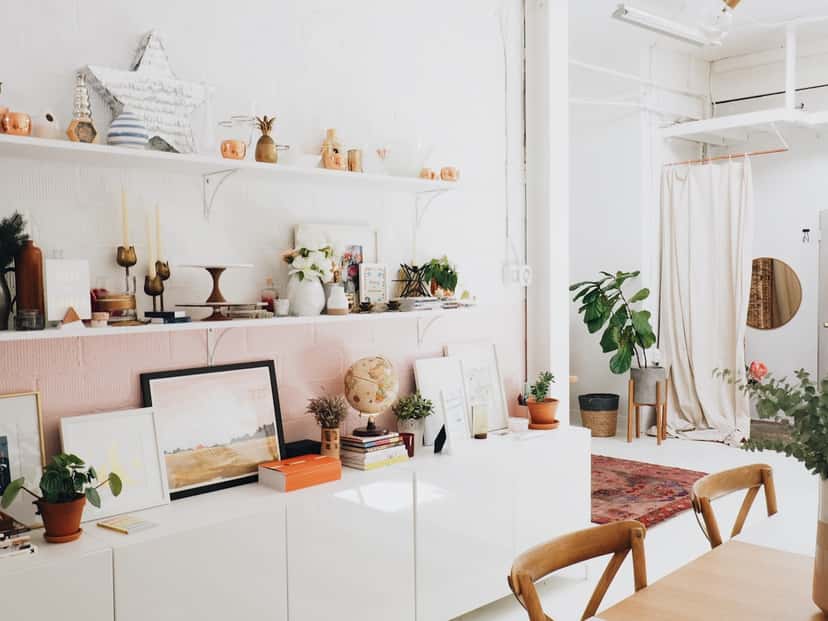
Leave 2 to 3 inches between canvases, and keep that gap identical everywhere in the arrangement. Consistent spacing is what separates a designed gallery wall from a random cluster. As a group, hang the arrangement so its overall center sits about 57 inches from the floor, standard gallery eye level.
Two refinements help. The 57-inch rule applies to the center of the whole composition, not each piece. And large canvases (24x36 and up) can take 3 to 4 inch gaps, while small prints under 11x14 look best at a tight 2 inches.
How Do You Keep a Gallery Wall Cohesive?
Pick one connecting thread and let everything else vary. That thread can be a color palette of two or three tones, a consistent subject like family portraits or coastal landscapes, or a uniform treatment such as converting every photo to black and white. One shared element makes even unrelated images read as a set.
Cohesion is easiest to test before you order. Upload your photos to the online design tool, check the group side by side with the live preview, and crop or swap images until the collection feels like one family. Because every print uses the same 100% cotton canvas and archival fade-resistant inks rated for 75+ years indoors, color stays consistent across the whole wall for decades.
Want an Instant Gallery? Use a Multi-Panel Canvas Set
Multi-panel sets are the shortcut version of a gallery wall: one image split across several perfectly matched canvases, with sizes and spacing designed as a unit. A three-panel canvas print fills the wall above a sofa with a single panorama, while a five-piece set delivers a dramatic, staggered skyline effect with zero layout guesswork.
Because the panels come from one image, cohesion is automatic. Hang them with 1.5 to 2 inch gaps, align their centers on one level line, and the wall is done in an afternoon. It is the best option for anyone who loves the gallery look but not the planning.

How Do You Hang and Level a Gallery Wall?
Hang the anchor piece first, then work outward one canvas at a time, checking level as you go. Since each canvas arrives ready to hang on solid pine stretcher bars, you only need a pencil, a level, a tape measure, and the right hooks for your wall type.
- Mark through the templates. With paper templates still taped up, mark each hanging point directly through the paper, then tear it away.
- Match hardware to weight. Standard picture hooks handle most canvases; use drywall anchors for pieces 24x36 and larger when you cannot hit a stud.
- Use two hooks on wide pieces. Anything over 30 inches wide stays level far better on two points than one.
- Check the whole wall, not each piece. Step back after every two or three canvases and view the full arrangement from across the room.
- Cheat with tape. A strip of painter's tape marked with your 2 to 3 inch gap makes a perfect spacing jig between pieces.
One practical note: orders over $99 ship free in the US and Canada, so ordering the whole gallery at once usually means every piece arrives together, ready to hang the same day.
FAQ
How many canvas prints do I need for a gallery wall?
Three is the minimum for a gallery effect, five to nine is the sweet spot for most walls, and large salon-style walls can hold twelve or more. Start sparse; you can always add later, and a slightly sparse wall looks better than a crowded one.
Do all the canvases need to be the same size?
No. Matching sizes only matter for grid layouts. Salon, centerline, and staircase layouts look best with mixed sizes built around one larger anchor piece. What must stay consistent is the spacing between canvases, ideally 2 to 3 inches everywhere.
How high should a gallery wall be hung?
Position the center of the entire arrangement about 57 inches from the floor, average eye level. Above furniture, keep the bottom row 6 to 10 inches above the sofa back or headboard so the grouping connects with the furniture below.
Can I create a gallery wall from one single photo?
Yes. A split canvas print divides one high-resolution image across multiple panels, giving you a coordinated multi-piece display without curating separate photos. Panoramas, cityscapes, and wide landscape shots work especially well.
What if my wall needs an unusual size?
Alongside 50+ standard sizes from 8x10 to 40x60, fully custom dimensions are available, so awkward slots between windows or above doorways can get a canvas cut exactly to fit. Preview any custom size against your photo in the design tool before ordering.