
Table of Contents
Most walls do not fail for lack of good pictures; they fail on height, spacing, and a missing plan. The photos are lovely and the frames are fine, yet the wall somehow feels scattered. The fix is not more art. It is a handful of measurements and a layout chosen on purpose, and every one of them is easier than it sounds.
Why Do Some Picture Walls Work and Others Feel Off?
Picture walls feel off for three predictable reasons: the art hangs too high, the pieces float too far apart, and nothing anchors the group. Galleries solved all three long ago, and the same rules translate directly to a living room: hang art at eye level, keep group spacing tight, and give every arrangement one dominant piece the eye lands on first.
The good news is that these are mechanical problems, not taste problems. You do not need an eye for design to fix a wall; you need a tape measure, some painter's tape, and about twenty minutes of planning before the first nail goes in.
How High Should Pictures Hang?
Hang pictures so the center of the artwork, or the center of the whole group, sits 57 to 60 inches from the floor. That is average eye level and the standard museums use, and it is almost always lower than instinct suggests. When art hangs above furniture, a different rule takes over: leave 6 to 10 inches between the furniture and the bottom edge of the art so the two read as one composed unit.
Within a group, keep 2 to 3 inches between pieces. Tight spacing makes separate frames read as one intentional collection; wide gaps make even well-chosen art drift apart visually. If a wall pairs one large canvas with smaller pieces, position the large piece first at the 57-inch center and build outward from it.
Stairways are the one place the eye-level rule bends: step the artwork up the wall so each piece sits at the same height above its nearest tread, and the whole series will track the climb naturally. Ceiling height matters too; rooms taller than the standard eight feet can carry art an inch or two higher without feeling off, while low-ceilinged rooms reward hanging exactly at the 57-inch center or even slightly below it.
Which Wall Layout Should You Choose?
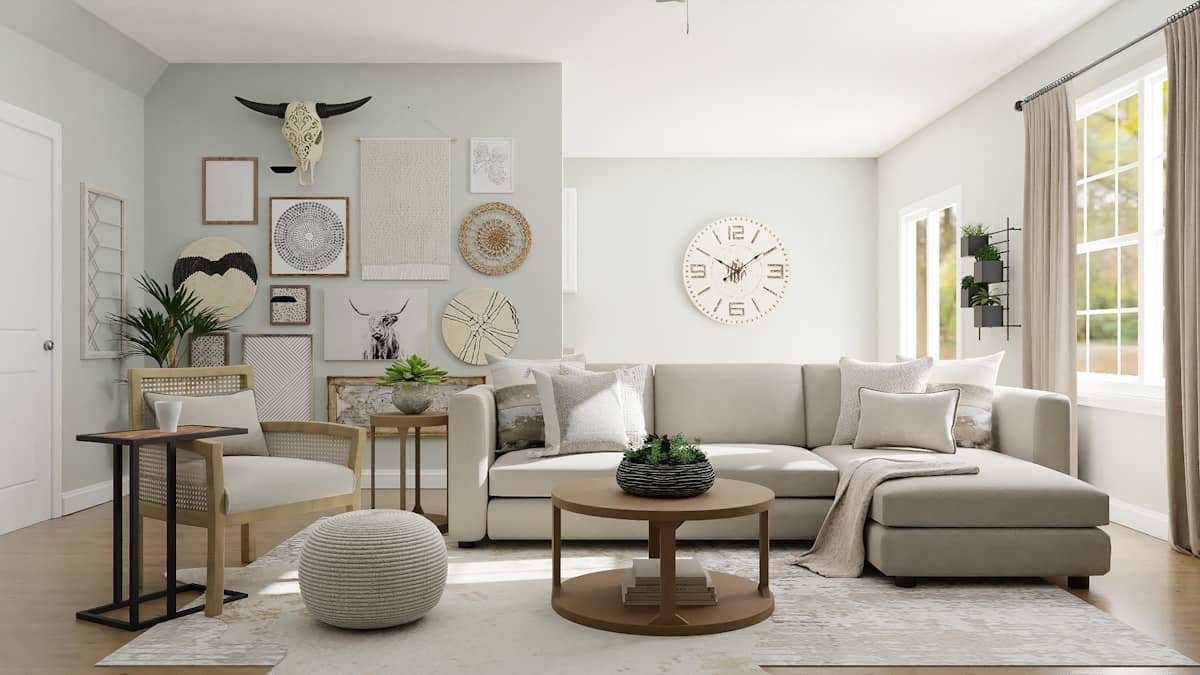
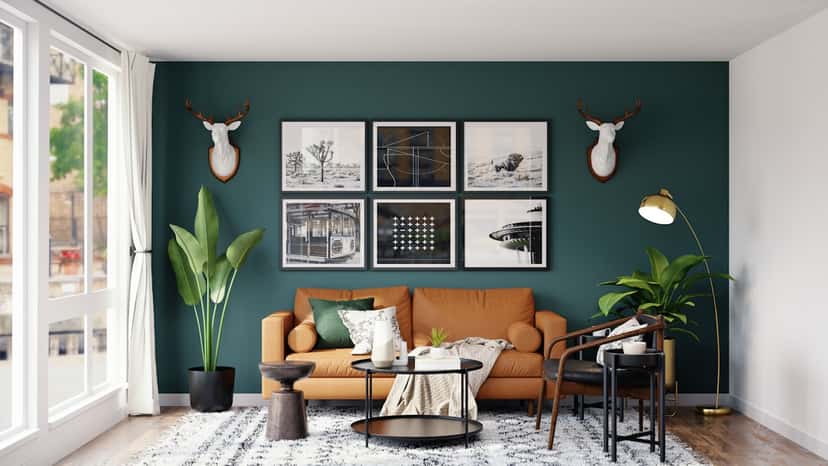
Choose the layout by the wall and by how many pieces you own: one statement canvas anchors a sofa wall, a grid suits a set of same-size prints, a linear series fits hallways, a salon-style gallery absorbs a growing mixed collection, and a multi-panel split turns a single photo into a finished arrangement with the spacing decided for you.
| Layout | Best For | Pieces | Effort |
|---|---|---|---|
| Single anchor canvas | Above a sofa, bed, or fireplace | 1 | Easiest |
| Symmetric grid | Same-size prints, formal rooms | 4 to 9 | Moderate, careful measuring |
| Linear series | Hallways and staircases | 3 to 5 | Easy |
| Salon-style gallery | Growing, mixed-size collections | 6 or more | Hardest, plan on the floor first |
| Multi-panel split | One wide photo as a statement | 3 or 5 panels | Easy, spacing is built in |
The grid rewards discipline: identical sizes, identical spacing, and it instantly reads as designed. The salon wall is its opposite, built around one anchor piece with smaller pieces radiating outward, edges aligned loosely rather than perfectly. And a three panel canvas print is the shortcut version of a statement wall: one panoramic photo, three panels, and the arrangement problem is already solved.
How Do You Plan the Arrangement Before Making Holes?
Plan on paper first. Trace each piece onto kraft paper or newspaper, cut out the shapes, and tape them to the wall with painter's tape. Live with the paper wall for a day, shuffle pieces until the balance feels right, then hammer nails straight through the paper and tear it away.

Two more habits save repainting later. Mark the hanging hardware position on each template, not just the outline, since a canvas often hangs from a point well below its top edge. And when a layout mixes orientations, balance visual weight diagonally, a large horizontal at lower left balanced by taller verticals at upper right, rather than sorting big pieces to one side. Our walkthrough on crafting a canvas gallery wall goes deeper on composition, and our canvas sizing guide helps match print dimensions to the wall before you order.
What Belongs on the Wall in Each Room?
Match the room's pace: living rooms carry the largest and most personal pieces, hallways suit sequences that reward walking past, bedrooms favor calmer images and softer contrast, and kitchens and entryways do best with small, cheerful pieces that survive being glanced at rather than studied.
Subject matter follows the same logic. A dramatic travel panorama earns the living room's anchor spot, a series of pet portraits turns a hallway into a story, and family photos gathered on a staircase wall grow naturally as the years add new frames. One wall per room should dominate; when every wall competes, none of them wins.
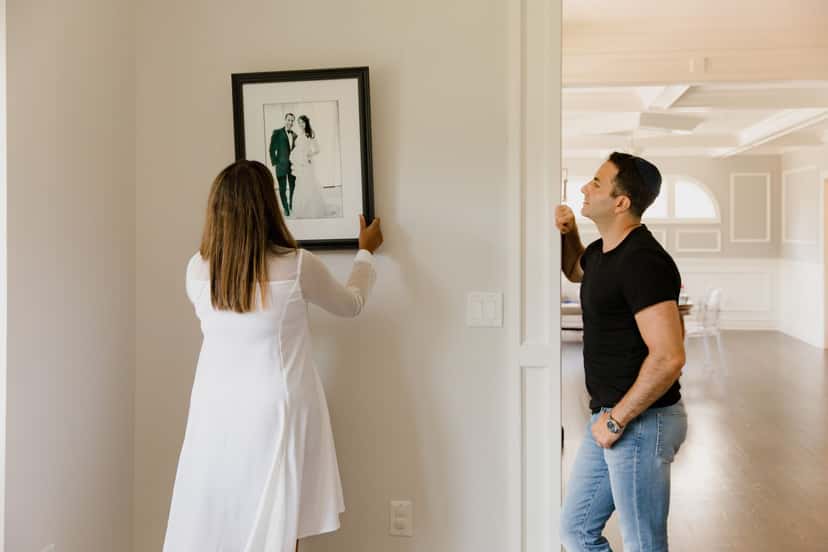
Family portraits, travel photography, and pet portraits all hang differently depending on the room they land in; our room-by-room canvas guide walks the whole house. When you know what goes where, the online design tool shows any photo at any size on a wall preview before you buy, and orders over $99 ship free across the US and Canada.
FAQ
What height should pictures be hung on a wall?
Center the artwork, or the center of a whole group, at 57 to 60 inches from the floor, which is standard eye level. Above furniture, ignore the rule and instead leave 6 to 10 inches between the furniture top and the bottom of the art so they read as one unit.
How much space should be between pictures in a group?
Keep 2 to 3 inches between pieces in a grid or gallery arrangement. Consistent tight spacing is what makes separate frames look like one deliberate collection; gaps wider than a hand-width make the group visually fall apart.
Can I mix canvas prints and framed pictures on one wall?
Yes, and the contrast usually helps. Keep something consistent across the wall, a color family, a black and white theme, or matching spacing, and let the frame styles vary. An unframed wrapped canvas beside thin-framed prints adds depth without clutter.
How do I hang pictures without damaging the wall?
For renters, adhesive strips rated above the artwork's weight hold small and medium canvases cleanly. Weigh the piece first, use more strips than the minimum, and press each strip for the full recommended time. Larger statement canvases still deserve a proper hook in a stud or anchor.